The Beartooth Highway can give you sunshine in Red Lodge, a sharp crosswind above timberline, and a cold shower near the pass – all before lunch. That is why a search for “how to pack beartooth motorcycle” deserves more than a standard weekend packing list. A comfortable ride here starts with planning for elevation, quick weather changes, and long stretches where you will be glad you brought the right layer rather than another T-shirt.
The good news is that packing well does not mean loading your motorcycle until it handles like a moving shed. It means bringing versatile gear, keeping the items you need most within reach, and leaving enough room to enjoy the road without worrying about your luggage at every pullout.
How to Pack for a Beartooth Motorcycle Ride
The Beartooth Highway rises from the foothills outside Red Lodge to nearly 11,000 feet at Beartooth Pass. At that elevation, even a warm summer morning can become chilly quickly. The road is spectacular, but it asks riders to be ready for wind, rain, temperature swings, and occasional delays from weather or road conditions.
Start with the rule that matters most: pack layers, not bulk. A moisture-wicking base layer, a warm mid-layer, and a waterproof outer layer can cover far more conditions than one oversized riding jacket. If the day warms up, the middle layer goes into a saddlebag. If clouds settle over the high country, it comes back on before you are shivering through the next set of curves.
Your outer gear should block both wind and rain. A waterproof or water-resistant riding suit is ideal, but a compact rain shell and rain pants work well if your regular gear is not weatherproof. Make sure the rain gear is easy to reach. It does no good buried beneath your overnight bag when the first drops begin to fall.
Gloves deserve the same attention. Many riders bring a lighter pair for the warm lower elevations and a warmer, weather-resistant pair for the pass. Cold hands make braking, clutch work, and long downhill sections less enjoyable. A neck gaiter is another small item with a big payoff when the wind picks up.
Build your riding outfit around changing conditions
For a summer Beartooth ride, think in terms of a cool morning, a mild afternoon, and a potentially cold mountaintop. Pack synthetic or wool layers that dry quickly. Cotton can feel comfortable in town, but it holds moisture and becomes cold when the weather turns.
A clear or lightly tinted helmet shield is helpful for changing light, especially if you ride early, late, or through passing rain. Sunglasses are useful for stops, but avoid relying on them as your only eye protection. Mountain weather and shifting light can change fast on a road with plenty of curves and dramatic views.
Sturdy over-the-ankle boots are worth the space they take. They provide better protection, keep feet warmer, and are more comfortable when you step off the bike at overlooks or walk around town. If your boots are not waterproof, pack dry socks in a sealed bag. A fresh, dry pair can rescue the second half of a rainy day.
Pack the motorcycle for balance, not just capacity
The temptation before a scenic trip is to bring everything. On the Beartooth, a balanced bike is safer and more pleasant than one carrying too much weight too high.
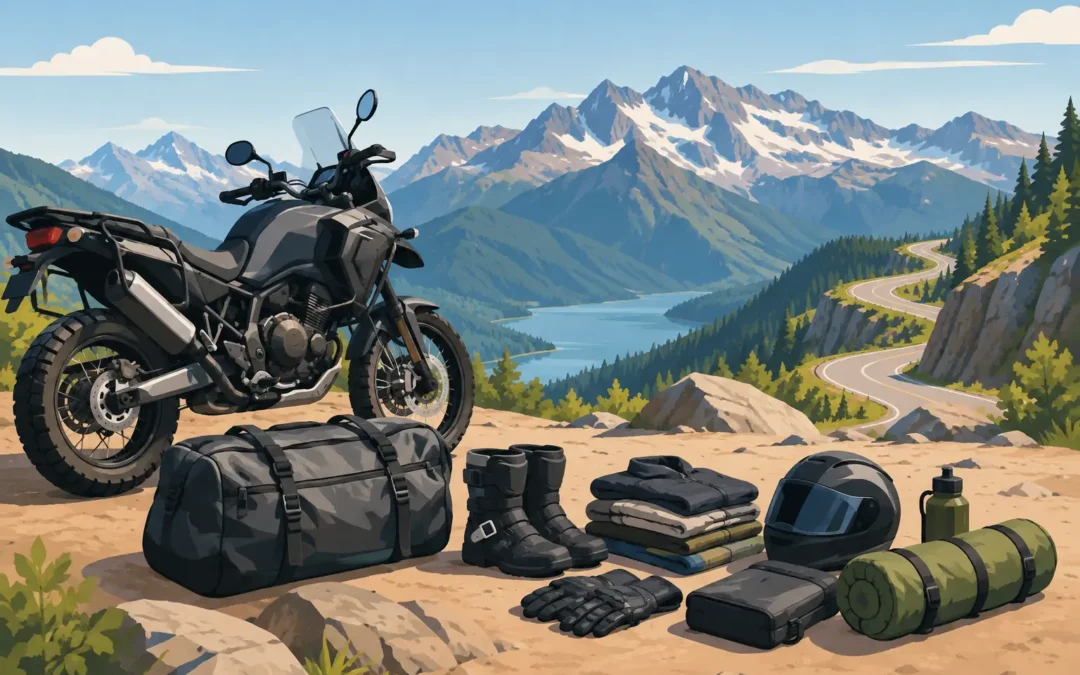
Keep heavy items low and close to the center of the motorcycle. Tools, spare fluids, and dense items such as locks or chargers belong at the bottom of saddlebags or in low-mounted luggage. Put lighter items – spare gloves, layers, toiletries, and casual clothes – higher up or in a duffel. If you use a rear bag, secure it tightly and check the straps after the first few miles.
Before leaving town, make a short test ride with the bike fully loaded. Pay attention to how it feels at low speed, during braking, and in turns. A loose sleeping bag or shifting duffel is distracting anywhere, but especially on a winding mountain road where your focus belongs on the next corner.
Use waterproof bags or dry bags inside your regular luggage, even if your saddlebags claim to be weatherproof. A little extra protection keeps clothing, electronics, and paper maps dry if you encounter heavy rain. Separate wet-weather items from your clean clothes so one damp pair of gloves does not soak everything else.
Keep a small essentials bag handy
A tank bag, handlebar bag, or easily opened saddlebag is the place for the items you may need without unpacking the bike. Keep your identification, wallet, phone, charging cable, sunscreen, lip balm, sunglasses, water, and a snack there.
Bring a paper map or written route notes as a backup. Phone navigation is useful, but mountain terrain and battery drain can create surprises. A portable power bank is a small addition that can keep a phone available for photos, directions, and check-ins.
You should also carry a modest roadside kit. It does not have to fill a whole pannier. A tire repair kit, compact inflator, basic tools suited to your motorcycle, flashlight, zip ties, and a small first-aid kit cover many common problems. If you ride with a group, coordinate who brings what so everyone is prepared without duplicating bulky gear.
Plan for comfort after the ride
A full day of mountain curves takes more energy than many riders expect. Pack one comfortable set of off-bike clothes, but keep it simple: a clean shirt, shorts or jeans, lightweight shoes, and sleepwear are usually enough. Quick-dry clothing is especially useful if you are traveling for several days or expect to do laundry on the road.
Hydration matters at altitude, even when the air feels cool. Carry water on the bike and drink at stops. Salty snacks, trail mix, jerky, or energy bars are smart to have on hand, particularly if your riding schedule gets ahead of meal stops.
Sunscreen belongs in your accessible bag. High-elevation sun can be stronger than it feels, and riders often forget about exposed skin around the neck, wrists, and face. Bug spray can also be useful for an evening outside after a day on the highway.
If Red Lodge is your starting point or your stop after the pass, leave room in your luggage for the part of the trip that is not spent in the saddle. A relaxed evening, a hot shower, clean clothes, and a good breakfast can make the next day’s ride feel completely different. Alpine Lodge Motel welcomes riders with the practical comforts that matter after the mountain – clean, quiet accommodations, laundry, outdoor space, and a place to settle in before or after a Beartooth adventure.
Check the forecast, then pack for more than the forecast
Always look at the weather before your ride, but do not treat a sunny forecast in Red Lodge as the full story. Check conditions for the pass and nearby higher elevations as well. Wind, cold rain, fog, and even summer snow are possible in the mountains.
Road openings and conditions can vary by season. The Beartooth Highway is typically a warm-weather route, and early or late-season plans may need flexibility. Construction, wildlife, and afternoon thunderstorms can also affect timing. Leave early when possible, ride at a pace that gives you room to stop, and do not build such a tight schedule that you feel pressured to continue in unsafe conditions.
A final walk-around before you leave is part of packing, too. Check tire pressure, tread, oil, lights, fuel, and luggage straps. Put on your warmer layer before you get cold rather than waiting until your hands are numb at a turnout. Small decisions like these help keep the ride enjoyable.
The Beartooth is not a road to rush. Pack light enough to handle the curves, smart enough for the weather, and comfortably enough to stop whenever the view tells you to pull over. That is where the best mountain ride stories usually begin.