A long day on the Beartooth Highway can leave you happily worn out, with mountain dust on your boots and tomorrow’s route already on your mind. Figuring out where to park motorcycles overnight should not be the last stressful decision of the day. The best answer is usually simple: choose a well-kept lodging property with designated parking, good visibility, and people nearby who know the area.
For riders arriving in Red Lodge, a little planning goes a long way. Your motorcycle needs more than an empty patch of pavement. It needs a stable surface, reasonable shelter from weather, room to maneuver with luggage, and a spot where you can turn in for the night without wondering whether your bike is okay.
Where to Park Motorcycles Overnight in Red Lodge
A motel, cabin property, or campground with on-site parking is generally the most practical choice for overnight motorcycle parking. You are close to your bike, you have a room and a warm shower waiting, and you are not trying to interpret downtown signs after dark. This matters even more after a full day of mountain riding, when fatigue can make a small parking mistake – such as choosing loose gravel on a slope – more frustrating than it needs to be.
When reserving a place to stay, ask one direct question: “Is there a suitable place to park motorcycles overnight?” A good host should be able to tell you whether parking is near the room, whether the lot is paved or gravel, how level it is, and whether trailers or larger touring groups need a particular area.
At Alpine Lodge Motel, motorcycle travelers are part of the Red Lodge summer rhythm. Riders often arrive after a memorable pass crossing and appreciate a clean, quiet place to settle in, stretch their legs, and swap road stories around the outdoor gathering spaces. Still, it is wise to confirm parking needs in advance, especially if your group has several bikes, a support vehicle, or a trailer.
Why lodging parking beats a public lot
Public parking can be convenient for dinner, shopping, or a quick walk through town. It is usually not the first choice for an unattended overnight motorcycle, particularly when you are unfamiliar with local restrictions. Some public lots have posted time limits, snow-route rules, or seasonal regulations. Others may be perfectly legal but leave your bike farther away than you would like.
Parking at your lodging puts the motorcycle within your evening routine. You can remove valuables, cover the bike if needed, check the weather, and look out the window before bed. It also makes an early start easier when the Beartooth weather gives you a narrow window of clear skies.
What Makes an Overnight Motorcycle Spot a Good One?
The right parking space is not always the closest one. A few practical details make a real difference, especially in mountain country.
First, look at the surface. Level pavement is ideal, but compact, firm gravel can work well if you choose a stable area and use a kickstand puck or pad. Fresh loose gravel, soft ground, deep sand, and hot blacktop can let a sidestand sink. If the site slopes, park so the bike leans securely on its sidestand and is less likely to roll forward.
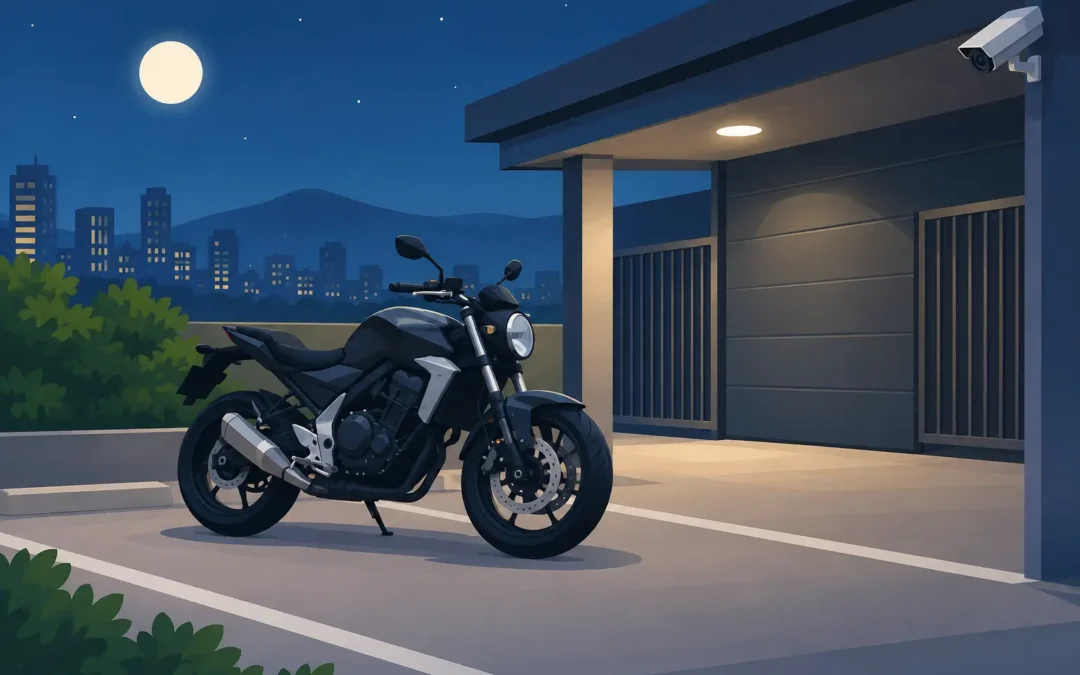
Second, consider visibility. A spot near guest rooms, a lobby, or a regularly used walkway is often better than a secluded corner behind a building. This is not about turning your trip into a security operation. It is simply common-sense travel planning: well-used, well-lit areas tend to give riders more peace of mind.
Third, leave yourself room. Loaded touring bikes, cruisers, and adventure motorcycles need a little extra space to turn and back out. Do not wedge yourself between cars if you will be leaving before sunrise. If you are riding with friends, parking bikes together can make unloading gear, setting covers, and getting rolling in the morning much easier.
Finally, think about the forecast. Red Lodge mornings can be cool even after a warm afternoon. Wind, rain, and fast-moving mountain weather are part of the experience. A location that keeps your bike away from low branches, roof runoff, and muddy edges of the lot is worth seeking out.
Simple Security That Does Not Slow Down Your Trip
Most riders want sensible protection without carrying half a garage across the country. The goal is to discourage opportunistic tampering and keep personal gear from becoming an easy target.
Start by taking valuables inside. Helmets, riding jackets, cameras, GPS units, luggage that detaches easily, and anything with personal information belong in your room when possible. Lock panniers and top cases, but do not rely on them as your only plan for expensive items.
A disc lock, fork lock, or alarmed lock can add a useful layer of deterrence. A bright reminder cable is helpful if you use a disc lock, since forgetting it in the morning is an unpleasant way to begin a great ride. For a group traveling together, parking in a visible cluster and checking that each bike is stable before heading to dinner is often enough to make everyone feel settled.
A cover can be useful for rain, dust, or keeping attention off the motorcycle, but it is not always the best choice in gusty weather. Secure it well, avoid covering a hot exhaust, and do not let it become a sail overnight. If the forecast calls for strong wind, a neatly packed cover in your luggage may be the wiser option.
Ask before you park under an awning or near a door
Covered areas can look tempting when rain is coming, but do not assume they are available for motorcycle parking. A walkway, entrance, fire lane, or loading area needs to stay clear. Ask the property staff before moving your bike into any covered or unusual space. Hosts can often suggest the best option without blocking another guest or creating a safety issue.
Parking for Groups, Trailers, and Long-Distance Riders
A pair of motorcycles can fit almost anywhere. Six or twelve motorcycles, plus pickup trucks and trailers, require a little coordination. Let the property know your group size before arrival rather than trying to solve it in the driveway after everyone has ridden 300 miles.
Group leaders should also share the arrival plan. If some riders are coming over the pass while others are taking a lower route, arrivals may be spread across several hours. Knowing that ahead of time helps a lodging team point riders toward appropriate parking and helps your group avoid reshuffling bikes after dark.
Travelers pulling trailers should ask about turning radius, overflow parking, and whether unhooking is necessary. RV sites and larger lodging properties may have more flexibility, but every layout is different. The best spot for a bike is not necessarily the best spot for a trailer, and planning for both protects everyone’s evening.
Do Not Forget the Morning Departure
Overnight parking should set up an easy morning, not create a problem you discover at 6 a.m. Before you go inside, check that the bike is in gear if that is your normal practice, the sidestand is firmly planted, and nothing is positioned where another vehicle could catch it. If frost, rain, or dew is expected, leave enough time in the morning to wipe the seat, visor, and mirrors before riding.
Mountain routes reward an unhurried start. Have breakfast, check conditions, layer up for the elevation ahead, and take a quick walk around the motorcycle before loading it. Look for a soft tire, loose strap, wet seat, or a forgotten lock. Those two calm minutes are part of good road-trip habits.
The best overnight spot is rarely the fanciest one. It is the place where your motorcycle is stable, visible, permitted, and close enough that you can stop thinking about it. Once that is handled, the evening belongs to a hot meal, a friendly conversation, and the mountain road waiting just beyond Red Lodge.