The Red Lodge to Yellowstone scenic drive is not a route to rush. It is a mountain day that starts with coffee in town, climbs above the tree line into big Beartooth country, and delivers you to Yellowstone through its quieter Northeast Entrance. Leave room for overlooks, changing weather, and the kind of stops that happen because someone in the car says, “We have to see what’s around that bend.”
For many travelers, this is the memorable part of getting to Yellowstone. The Beartooth Highway follows US Highway 212 from Red Lodge over high country and toward Cooke City and Silver Gate before reaching the park. It is spectacular, but it asks a little more from drivers than an ordinary highway. A sound plan lets you enjoy every mile.
What to Expect on the Red Lodge to Yellowstone Scenic Drive
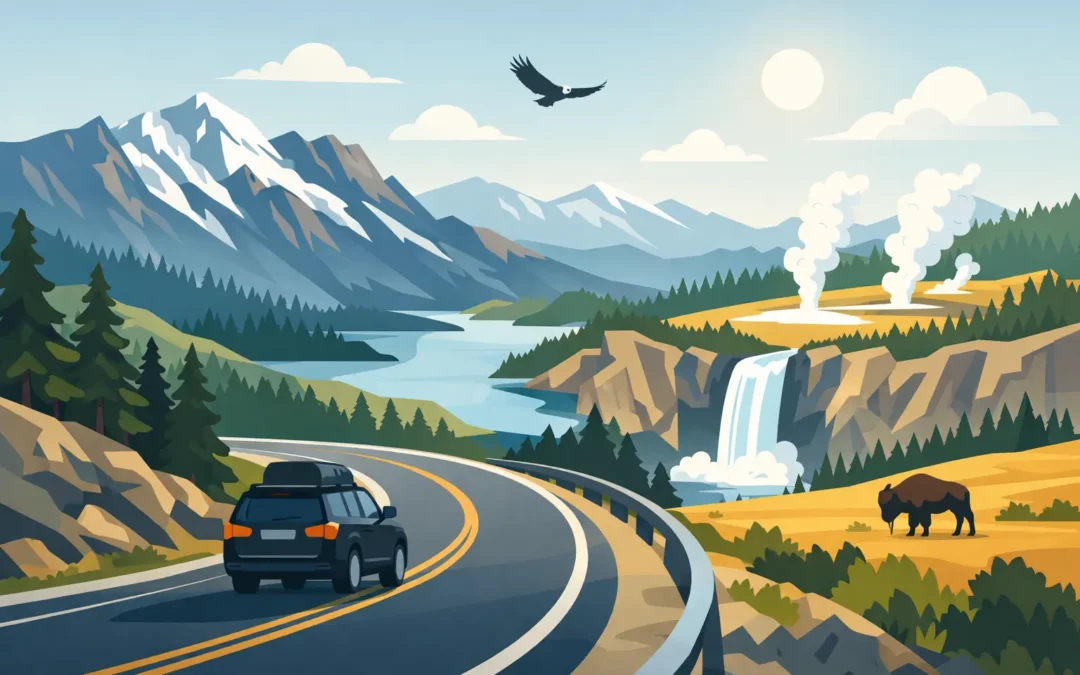
From Red Lodge, US 212 rises quickly into the Beartooth Mountains. The pavement winds through forest, open slopes, alpine lakes, and broad rock country before crossing Beartooth Pass at nearly 11,000 feet. On the other side, the road descends toward Cooke City and Silver Gate, two small mountain communities just outside Yellowstone’s Northeast Entrance.
The distance from Red Lodge to the Northeast Entrance is roughly 68 miles, but distance is not the useful measure here. With clear roads and only a couple of short stops, plan on at least two hours. Most guests are happier allowing three to five hours before they even enter Yellowstone. Add more time if you enjoy photography, are traveling with children, or want to stop for a picnic and a short walk.
This is not an interstate drive. Expect steep grades, sharp curves, high elevations, and frequent pullouts that can make an afternoon disappear in the best way. Motorcyclists and RV travelers can enjoy the route too, but should be especially thoughtful about weather, braking, vehicle condition, and comfort on narrow mountain curves.
Timing Matters More Than Your Map App
Beartooth Highway is a seasonal road. Deep snow closes the high section each winter, and spring opening dates depend entirely on snow removal and road conditions. It often opens around Memorial Day and can close again in the fall as snow and ice return, but those dates are never a promise.
Before leaving Red Lodge, check current highway and park conditions. A blue-sky morning in town can turn into cold wind, hail, fog, or snow at the pass. Even in July, temperatures at the top may feel dramatically cooler than they did at breakfast. Bring layers, a rain shell, water, and something warm for anyone who plans to step outside at the overlooks.
Early morning brings quieter roads and softer light on the mountains. Midday can be ideal for a relaxed picnic, while late afternoon may bring summer thunderstorms. If storms are building, do not linger in exposed alpine areas. The views will still be there tomorrow; a safe return to town is the better story.
If the Beartooth Highway is closed, Yellowstone is still reachable from Red Lodge, but the drive becomes a longer detour. That is one reason flexible plans work well here. Treat the Beartooth route as a high-country bonus with real seasonal limits, not as a road you can count on every month of the year.
Prepare Before You Climb Out of Red Lodge
Fill your fuel tank in Red Lodge. There are services farther along the route, particularly around Cooke City, but mountain communities operate on mountain schedules and options are limited compared with larger towns. Starting full gives you freedom to stop without watching the gauge.
Download maps before departure, too. Cell service can be inconsistent through the mountains and around Yellowstone. Carry your park pass or be ready to purchase entry at the Northeast Entrance, and keep a paper map in the vehicle if you prefer a backup that does not need a signal.
A few practical checks make a difference on this road: make sure your tires are in good shape, keep drinking water in the car, pack snacks, and bring a basic first-aid kit. Travelers prone to altitude discomfort should take it easy at the summit. A slow walk, plenty of water, and a few extra breaths are wiser than trying to turn every overlook into a hike.
Stops Worth Making Along the Way
The best stops depend on the day’s weather and your group’s energy, but this route rewards curiosity. Use designated pullouts rather than stopping along the travel lane, and give yourself permission to skip a stop if parking is full or conditions feel unsettled.
Rock Creek Vista Point
Not far from Red Lodge, Rock Creek Vista Point offers a fine early look at the canyon and the road ahead. It is an easy place to stretch your legs before the bigger climb begins. The view also gives first-time visitors a sense of why this highway has earned such a strong reputation.
The Beartooth Pass Area
Near the top, the landscape opens into a striking alpine world of rock, snowfields, and small lakes. This is the portion of the drive people remember years later. Wind can be strong, and snow can linger well into summer, so keep a jacket close rather than buried beneath luggage.
Take your time at the marked viewpoints, but avoid wandering onto unstable snow or standing too near steep edges for a photograph. The mountain does not need help looking dramatic.
Cooke City and Silver Gate
After the long descent, Cooke City and nearby Silver Gate make natural places to pause before entering Yellowstone. They are small, friendly, and distinctly different from the busy gateways found elsewhere around the park. Depending on the season, you may find a meal, fuel, or a simple place to regroup before the next part of the day.
Lamar Valley
Once inside Yellowstone, the Northeast Entrance leads toward Lamar Valley, one of the park’s best-known wildlife viewing areas. Wildlife sightings are never guaranteed, and that uncertainty is part of the experience. Bring binoculars if you have them, pull over only where it is safe and legal, and follow all current park guidance about viewing distances.
If animals are near the road, expect traffic to slow. Be patient and do not create a second hazard by stopping in a lane or approaching for a closer look. A long lens and a little patience are far better than a close encounter.
Drive the Highway With Mountain Sense
The Beartooth Highway is paved and well-loved, but it is still mountain driving. Descend in a lower gear when needed so your brakes do not do all the work. Stay in your lane on blind curves, watch for cyclists and motorcycles, and leave extra space when roads are wet.
Wildlife can appear at any hour, particularly near dawn and dusk. Keep your speed appropriate for visibility, not just the posted limit. If fog, snow, or heavy rain rolls in, slow down or turn around if conditions no longer feel comfortable. There is no prize for completing a scenic drive when you cannot see the scenery.
Large RVs and trailers need special consideration. Many experienced RV travelers make the route successfully, while others prefer a different approach based on their rig size, towing confidence, and weather. Know your vehicle’s limits, use turnouts to let faster traffic pass, and do not let a tight schedule push you into a choice that feels wrong.
Make It a One-Way Adventure or a Full-Day Loop
A same-day return over Beartooth Pass gives you a second look at the mountains in different light and returns you to the comfort of Red Lodge. It works beautifully when your Yellowstone plans focus on Lamar Valley or when you want a scenic day without changing lodging.
A one-way trip makes more sense if you are continuing deeper into Yellowstone, staying elsewhere in the park, or heading toward Cody or Gardiner afterward. It depends on your travel style. Families may appreciate a slower two-night plan, while road trippers sometimes prefer to keep moving. Either way, do not underestimate how much energy the high-country drive and Yellowstone’s first wildlife stops can take.
After a day of switchbacks, pullouts, and open mountain sky, Red Lodge feels especially welcoming. A quiet room, a hot shower, and time around a fire pit can be the right finish to a big day on the road. At Alpine Lodge Motel, travelers can settle in close to town, enjoy the old-Montana welcome, and wake ready for whatever the mountains decide to show them next.