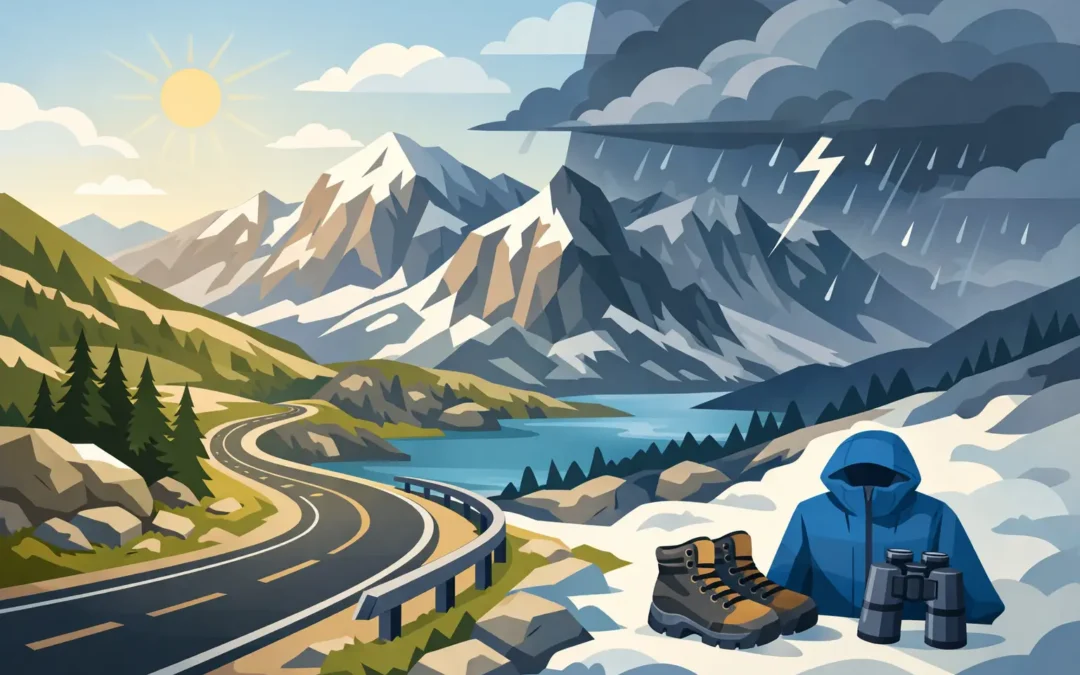
A bluebird morning in Red Lodge can turn into a cold, windy afternoon above timberline before you have finished the drive. To prepare for Beartooth Pass weather, plan for the conditions at nearly 11,000 feet, not just the temperature outside your motel room. The views are worth the effort, but this is real high country where summer storms, sharp temperature drops, snow, and strong wind can all arrive quickly.
The best approach is simple: start early, carry more layers than you think you will need, keep your vehicle fueled, and allow the mountain to set the pace. A little preparation gives you more freedom to enjoy the overlooks, trailheads, wildlife sightings, and wide-open switchbacks instead of worrying about what comes next.
Why Beartooth Pass Weather Changes So Fast
The Beartooth Highway climbs from the foothills near Red Lodge into exposed alpine terrain. Elevation makes the difference. Temperatures can be 20 to 30 degrees cooler at the pass than in town, and wind can make it feel colder still. A warm July afternoon in Red Lodge does not promise a warm picnic at Beartooth Pass.
The road also crosses country with very little shelter. Once you are above the trees, clouds and weather systems have room to move fast. Afternoon thunderstorms are common in the mountains during summer. Rain may begin as a light sprinkle at one overlook and become hail, sleet, or a brief snow shower farther up the road.
That does not mean every trip requires foul-weather gear from head to toe. It does mean flexible plans are wiser than a fixed schedule. If the forecast calls for storms after noon, enjoy the pass in the morning and plan a relaxed lunch, coffee, or a walk through Red Lodge later in the day.
Check Conditions Before You Leave Red Lodge
A forecast is a starting point, not a guarantee. Check the current highway status and mountain forecast the evening before your drive, then check again in the morning. Look beyond the daily high temperature. Pay attention to wind speeds, thunderstorm timing, precipitation, and any road advisories.
Beartooth Pass is seasonal. Snow can keep the highway closed well into late spring, and early fall storms can cause temporary closures or require travelers to change plans. Opening and closing dates vary with snowpack, plowing progress, and weather, so never rely on last year’s timing.
Cell service can be limited in the mountains. Download maps before departure, tell someone where you are headed, and do not assume you can look up conditions once you are high on the pass. If you are traveling toward Yellowstone, remember that a closure on the pass can affect the whole day’s route. Have a backup plan that still makes the most of your Red Lodge stay.
Dress for the Pass, Not the Parking Lot
The most comfortable travelers use simple layers. Start with a T-shirt or moisture-wicking base layer, add a fleece or warm mid-layer, and bring a windproof, waterproof outer shell. Even on a sunny day, a light hat and gloves can feel surprisingly welcome when you step out for photos in cold wind.
Footwear matters, too. The roadside viewpoints are easy to enjoy in regular walking shoes, but wet rocks, snow patches, and uneven ground can make sandals a poor choice. If you plan to hike, choose shoes or boots with traction and bring dry socks in the car.
A small day bag keeps the essentials together: water, snacks, sunscreen, sunglasses, a warm layer, rain protection, and any medications you may need. The sun at elevation is strong, including on cool days, so sunscreen is not just a hot-weather item. Families should keep extra warm layers handy for children, who often get chilled sooner when the wind picks up.
Get Your Vehicle Ready for Mountain Driving
The Beartooth Highway is one of the great scenic drives in America, but it asks drivers to pay attention. The pavement is steep, winding, and exposed in places. Before leaving town, fill the fuel tank, check your tires, and make sure your brakes are in good condition. Bring drinking water, snacks, and a basic emergency kit.
Use lower gears when descending long grades rather than riding the brakes. Give motorcycles, bicycles, wildlife, and other drivers plenty of room. Rain, fog, hail, and snow can reduce visibility quickly, while wet pavement may be slick even in summer.
If you are traveling by motorcycle, weather preparation is especially personal. Waterproof layers, insulated gloves, a warm neck covering, and dry backup gear can turn a difficult ride into a memorable one. Riders should be honest about conditions. Waiting out a storm in Red Lodge, or turning around when visibility disappears, is good mountain judgment.
RV travelers and drivers pulling trailers should take extra care with route planning. Check your vehicle’s capabilities and current road guidance before committing to the steepest sections. The pass is not a route to rush, and there is no prize for continuing when weather or vehicle limitations say otherwise.
Give Yourself Time to Acclimate
High elevation affects people differently. Some visitors feel only a little short of breath; others notice a headache, fatigue, nausea, or dizziness. Take it easy when you first arrive at the top, drink water regularly, and avoid turning a quick roadside stop into a strenuous hike if you are not feeling right.
The pass is a beautiful place to slow down. Stop at overlooks, breathe, take photos, and let your body adjust. Alcohol and dehydration can make altitude symptoms worse, so save the celebratory drink for after you are back in town.
If symptoms become severe or do not improve after resting and descending, seek medical help. The safest response to significant altitude discomfort is often to go lower, not to push farther into the mountains.
Know When to Wait, Turn Back, or Change Plans
A successful Beartooth day is not measured by reaching the highest point on the map. Mountain weather deserves respect. Turn back or delay your drive if lightning is nearby, fog makes the road hard to see, hail is accumulating, winds are difficult to manage, or an official closure is in place.
Do not stop in an exposed area to watch a thunderstorm. Stay in your vehicle if lightning is active, and avoid high points, open ridges, lakeshores, and isolated trees. If you are hiking, head down early rather than waiting for clouds to build overhead.
The same goes for wildlife. You may see mountain goats, marmots, deer, elk, or bears along the route, but viewing them safely means staying well back and never feeding them. A stopped car can create a hazard on a narrow mountain road, so pull completely into designated areas whenever possible.
Make Red Lodge Your Weather-Smart Base Camp
One advantage of beginning in Red Lodge is having options. If the pass is clear, you can get an early start and enjoy one of the country’s most remarkable mountain roads. If weather changes, you can shift gears without losing the day – linger over breakfast, visit local shops, enjoy a coffee, or plan another attempt when the forecast improves.
At Alpine Lodge Motel, we have welcomed enough pass travelers to know that the best stories usually come from guests who gave themselves time. Some return glowing from a sunny ride over the summit. Others wait out rain by the fire pit, dry their gear, and head out under better skies the next morning. Both are part of a True Red Lodge Experience.
Bring layers, keep your plans loose, and start with a full tank and a current forecast. Then let the Beartooths show you what they have to offer. The road will still be beautiful when you give it the patience it deserves.